

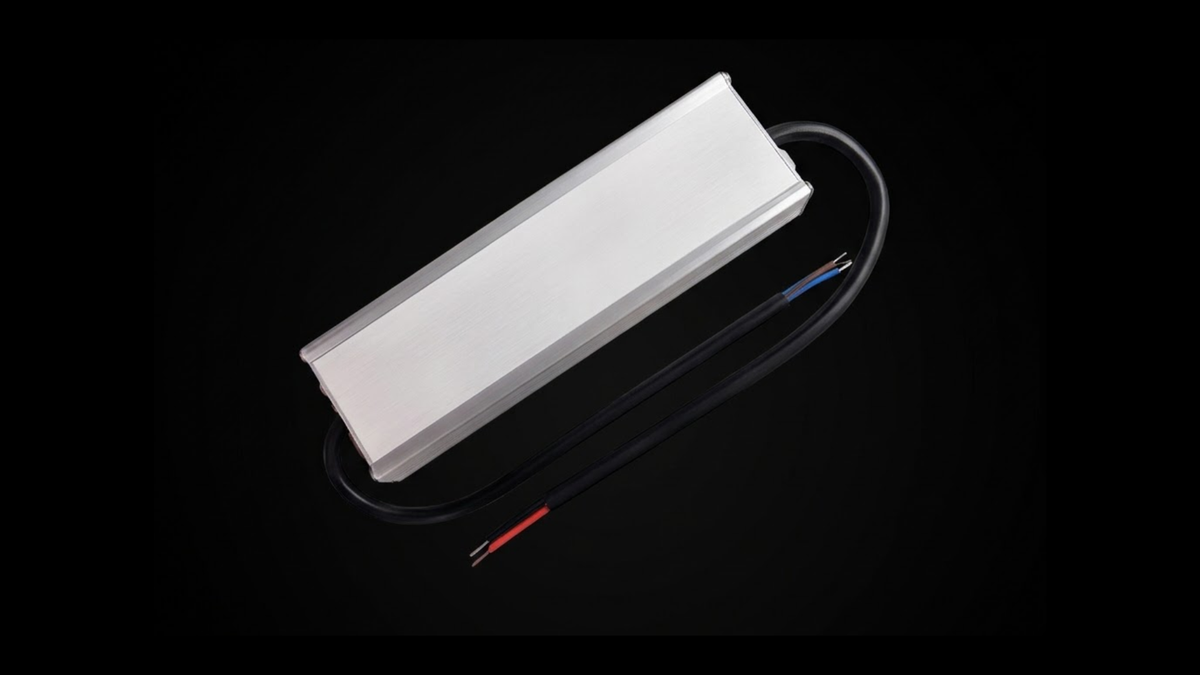

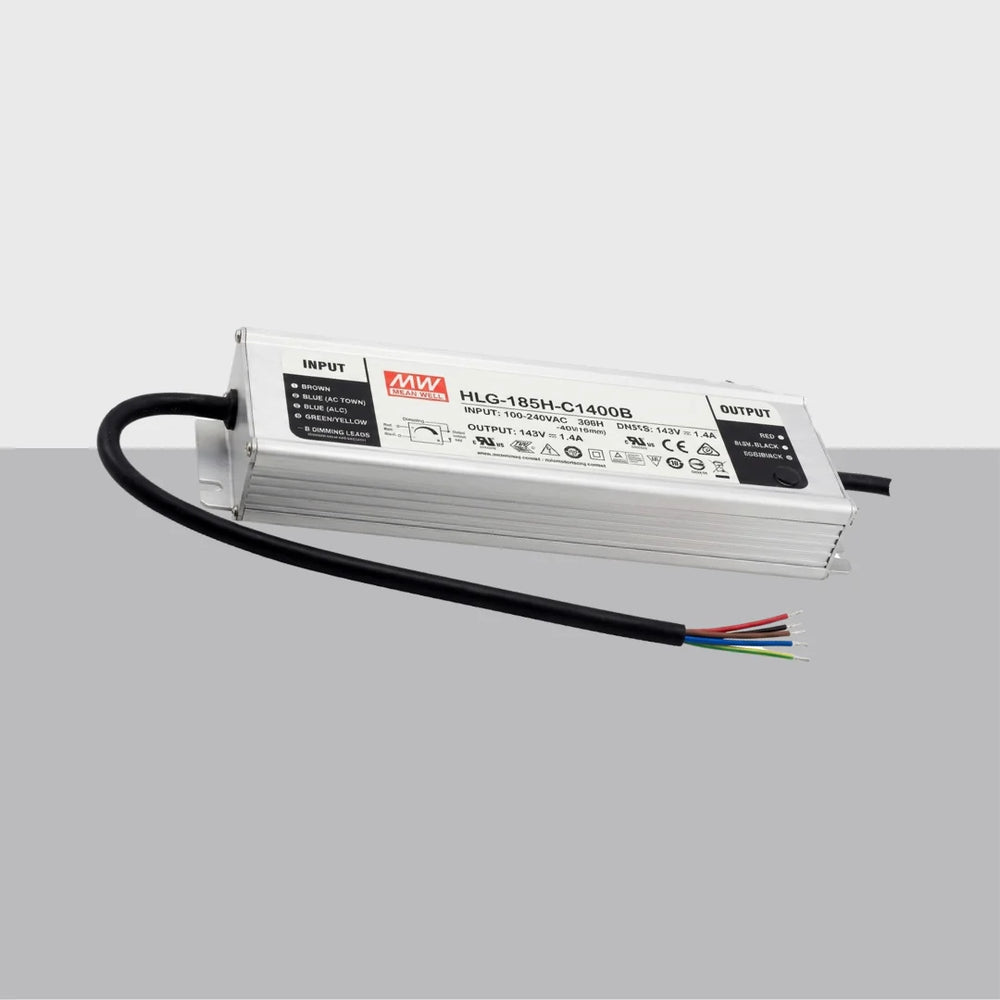


The driver converts your mains supply into the low-voltage current an LED needs. It is also the component most likely to fail in a strip-lighting install — almost always because it was undersized.
Sizing it properly
- Find the watts per foot or per metre on your strip's spec sheet.
- Multiply by the total length of the run.
- Add 20 percent headroom.
Example. A 20-foot run of 4.4-watt-per-foot tape draws 88 watts. Add 20 percent and you need at least 106 watts — so fit a 120-watt driver.
A driver running at its rated maximum runs hot, and heat is what kills it. The headroom is not optional.
Constant voltage or constant current?
| Constant voltage | Constant current | |
|---|---|---|
| Output | Fixed 12V or 24V | Fixed mA, variable voltage |
| Use for | LED tape and strip | Integrated fixtures, downlights |
| Sizing by | Total wattage | Matching the fixture's exact spec |
Strip lighting is nearly always constant voltage. 24V is the better choice for runs over about 16 feet, because it loses less brightness along the length.
Dimming
A driver has to be built for dimming, and it has to be matched to your dimmer type — TRIAC, 0-10V, or DALI. Mismatched pairs are the cause of nearly every flickering LED install. Buy the driver and the dimmer together, and check both spec sheets against each other before either goes in a wall.
Where it lives
The driver needs airflow and it needs to be reachable. Sealing one inside a closed ceiling void is a repair job waiting to happen. Use an accessible cupboard, a service panel, or a junction box with ventilation.
Related
See also LED strip lights, LED channels and profiles, and landscape lights.