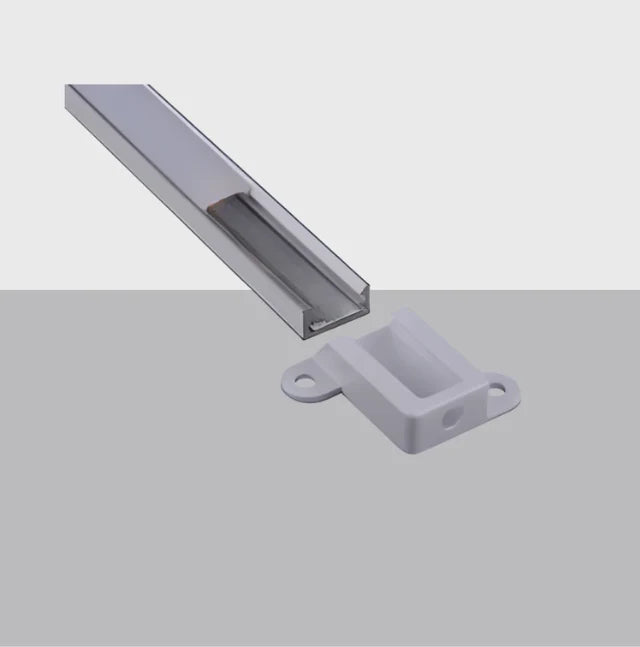
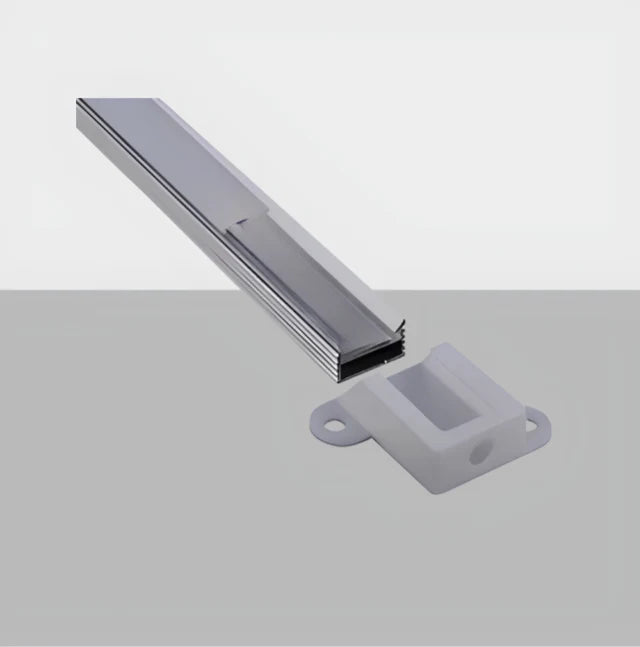
Recessed LED Channel | Flanged and Trimless Aluminium, 1m to 3m
Save $-5.50
In stock
Ask An ExpertSubtotal: $5.50
Fast Delivery: USPS Priority Mail
- Flat Rate Shipping
- Secure Checkout — SSL Encrypted
Frequently Bought Together
Total: $47.68
Set into the surface, not onto it
A recessed profile sits inside the ceiling, wall or joinery, so all that shows is a line of light flush with the finish. It is the difference between a fixture you can see and a detail that looks built in.
The trade is that it has to be planned. A surface channel can be screwed on at any point; a recessed one needs a groove cut, and once it is in, it does not move.
Flanged or trimless
| Flanged | Trimless | |
|---|---|---|
| What shows | Two thin lips over the cut edge | Nothing but the light |
| Cut quality needed | Forgiving — the flange hides it | Exact |
| Finishing | Plasterer has an edge to work to | Plastered right up to the profile |
| Suits | Retrofit, plasterboard, joinery | New build, high-spec detailing |
On a retrofit take flanged. It hides a rough edge and gives the plasterer or joiner something to finish against, which saves an argument on site.
Deep or standard recess
A deep profile sets the tape further back, so the light emerges as a narrower band with a softer edge. It also holds more aluminium, which helps on a high output run. A standard depth sits closer to the surface and throws a wider spread. Deep for a defined architectural line, standard for general coverage.
Cutting the slot
Route or cut a groove slightly wider than the channel body but narrower than the flange, so the lips have something to sit on. Measure the flange width before setting the router and test on an offcut. In plasterboard, plan the run to avoid the joists rather than cutting around them.
Order before first fix
Recessed profiles belong in the programme early. Have them on site before the ceiling closes, because retrofitting a recessed run into a finished surface means opening it again.
Related
For a run that can be moved later see our surface mount channels. For the narrowest recessed line, see the slim profiles.