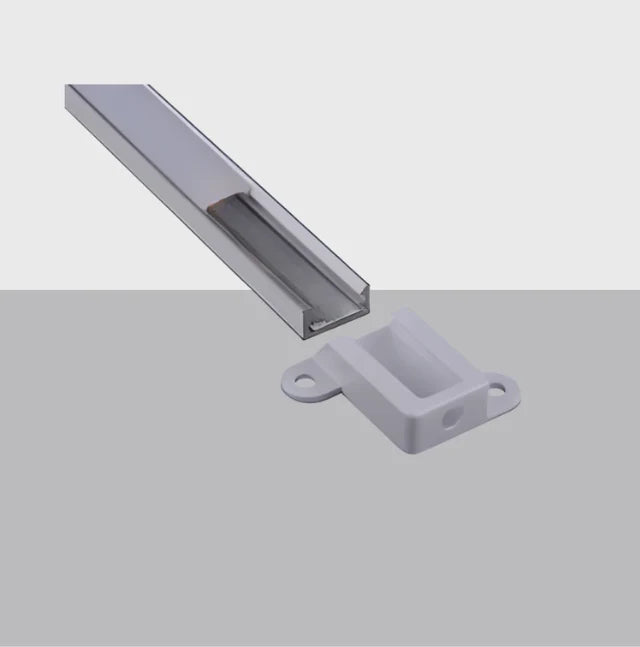
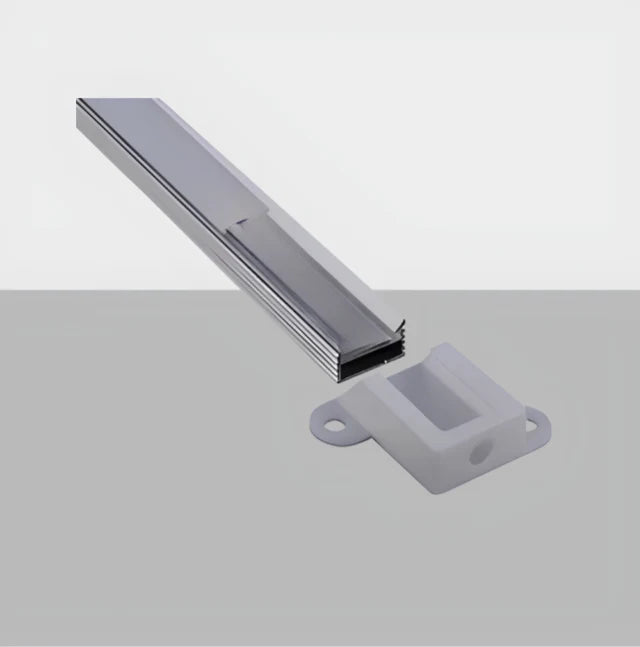
Wide LED Channel | Large Aluminium Profiles for High Output Tape
Save $-5.27
In stock
Ask An ExpertSubtotal: $5.27
Fast Delivery: USPS Priority Mail
- Flat Rate Shipping
- Secure Checkout — SSL Encrypted
More aluminium for more output
These are the largest profiles in the range. They take the 12mm boards that will not fit a standard channel — double-line, RGBW and RGB+CCT tape — and several are wide enough for two strips side by side.
The extra width also means more metal, and more metal means better heat transfer. On a high output run that is the difference between tape holding its brightness and tape dimming after a couple of years.
Where the width is needed
| Tape | Board | Profile needed |
|---|---|---|
| Standard COB, single line | 8mm | Any surface channel |
| RGB COB | 10mm | Standard or wider |
| Double-line COB | 12mm | Wide |
| RGBW / RGB+CCT | 12mm | Wide |
| Two strips together | — | Widest |
Two strips in one channel
Running a white strip and a colour strip in the same profile lets one fixture do everyday light and effect light without two separate installations. Both need their own driver and their own control run, so plan the cabling before the channel goes up.
A wide profile is meant to be seen
A 42mm channel reads as a deliberate architectural line rather than a hidden detail. A 7mm one disappears. Decide which you want before choosing the width, because the two look nothing alike once the light is on.
Heat is why you are paying for the aluminium
High output tape produces more heat, and a narrow profile cannot shed it fast enough. Putting 12mm tape into a channel meant for 8mm — even if you can force it in — gives up the one thing the channel was for.
Ordering
Measure the run, round up to the next whole metre, add a spare length. Order end caps and mounting clips at the same time. Cut with a fine-toothed hacksaw and a mitre box, fix the channel, press in the tape, clip the diffuser on last.
Related
For narrower runs see our standard and slim channels. For the tape that goes inside, see double-line and RGBW COB tape.